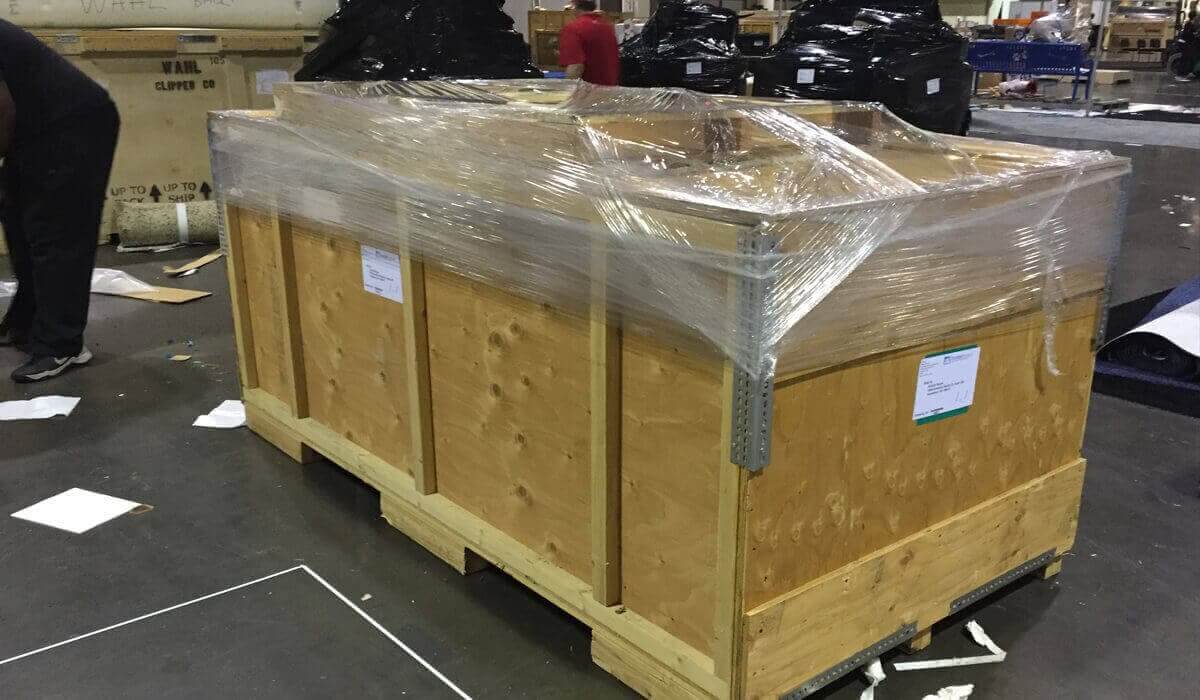
Essential Components of Effective Custom Crating
Dimensional engineering tailored to exhibit footprints for venues up to 500,000 square feet
Foam padding and shock-absorbing interiors to withstand long-haul trucking to Miami Beach
Climate-resistant sealants addressing humidity in transit to Biscayne Bay-area sites
Labeling and tracking systems integrated for multi-stop shipments to convention clusters
Reusable crate frameworks optimized for repeated use in Miami-Dade and Broward events
Compliance with freight weight limits at airport-proximate facilities like MACC
Structural reinforcements for stacking in exhibit hall pre-build phases
Tailoring Crates to Miami Venue Scale and Freight Realities
Exhibitors targeting the Miami Beach Convention Center must contend with freight pathways that navigate the Collins Corridor hotels and South Beach districts, where custom crates need to balance bulk with maneuverability for efficient Dock to Hall transitions. Designs incorporate precise measurements derived from booth layouts spanning thousands of square feet, ensuring that truss systems, LED walls, and podiums fit snugly without shifting during the journey from west-side access points in Doral or Miami Springs. This approach draws on the center's 60,000 Square Foot Grand Ballroom capacity alongside exhibit floors, highlighting the need for crates that handle both oversized and ancillary items without exceeding standard trucking configurations.
Protection layers within these crates feature interlocking foam profiles that distribute pressure evenly, critical for assets en route to the Miami Airport Convention Center's 172,000 square feet of total space, including its 29,000 Square Foot ballroom. Here, proximity to airport cargo facilities shortens initial legs but intensifies demands on crate durability against rapid loading cycles. Coordination ensures that crate exteriors withstand pallet jack impacts and forklift grips common in these high-volume environments, preserving surface finishes on tension fabrics and acrylic panels essential for professional presentations.
Plywood sheathing with treated edges for moisture barriers
Internal bracing for vertical loads up to 5,000 pounds
Ventilation ports to equalize pressure during air freight options
Engineering Protection for Modular and Rental Exhibits
Modular exhibit systems, prevalent in Miami's rental programs for events at the Miami Convention Center and James L. Knight Center, require crates segmented by component type to facilitate partial rebuilds. Each module—whether tension grid, platform bases, or graphic pods—receives individualized padding calibrated to its fragility profile, preventing abrasions during disassembly at originating sites and reassembly in Downtown Miami's walkable conference zones. This segmentation aligns with the Knight Center's 16,000 Square Foot largest room, where space constraints amplify the value of compact, protective packaging.
Asset protection extends to electronics and lighting rigs, encased in anti-static liners and vibration-dampening mounts to endure the vibrations of I-95 trucking toward Midtown Miami or Edgewater activations. For Broward spillovers, crates incorporate wheels or skids for smooth handoffs to regional transportation networks, ensuring that assets emerge ready for immediate integration into 350,000 Square Foot exhibit layouts without refurbishment delays.
The planning process reviews venue manuals for each project, adapting crate specs to rules at Fontainebleau's Coastal Convention Center, where rooftop and bay-view spaces demand lightweight yet resilient enclosures for elevated transport.
Navigating Environmental and Handling Risks in South Florida Transit
Miami's coastal positioning introduces humidity fluctuations that custom crating counters with vapor-corrosion inhibitors and sealed interiors, vital for metal frameworks heading to the Faena Forum in Miami Beach. These measures protect against salt-air exposure during beach corridor routes, maintaining the integrity of powder-coated finishes and aluminum extrusions for shows utilizing the center's 84 meeting rooms. Crate linings include desiccant packs refreshed per transit duration, calibrated for the 12-mile Airport to Venue hauls.
Handling protocols emphasize corner reinforcements and lift-point reinforcements, addressing fork-pocket stresses at docks serving the Miami Airport Convention Center's 45 breakout rooms. This fortification prevents denting or cracking of edge profiles on counters and shelving units, common vulnerabilities in multi-axle truck stacks bound for Wynwood or Design District product launches.
Integration with GMCVB-listed transportation suppliers ensures Chain of Custody tracking, from warehouse staging in Hialeah to final offload at Brickell conference hotels, minimizing exposure to uncontrolled environments.
Gasketed lids for airtight seals
UV-resistant exterior coatings
Shock indicators for post-transit inspections
Post-Event Repackaging and Asset Lifecycle Management
After events in the Miami Beach Convention Center's expansive halls, repackaging follows a reverse-engineering sequence that mirrors initial crate specs, capturing any wear from 500,000 Square Foot floor traffic. Technicians document condition changes for future adjustments, ensuring rental assets cycle back into inventory without cumulative degradation. This phase coordinates with dismantle schedules, prioritizing high-touch items like interactive kiosks before bulk truss disassembly.
For ongoing programs spanning Miami-Dade to Broward, lifecycle crates evolve with usage data, incorporating wear pads or modular liners for repeated exposures to venue-specific I&D flows. At the Airport Convention Center, rapid turnaround for Back to Back bookings demands crates that support same-day repacks, leveraging its 100,000 Square Foot exhibit efficiency.
Planning incorporates supplier ecosystem partners for storage interim, aligning with venue-managed platforms at properties like the Knight Center, where post-show freight windows dictate repack precision.
Sequential labeling for rebuild efficiency
Inventory barcoding for asset tracking
Refurbishment pockets for minor repairs
Coordinating with Venue-Specific Logistics and Suppliers
Alignment with each venue's freight manual, such as those governing the Miami Beach Convention Center's Grand Ballroom setups, informs crate permitting and labeling standards. This ensures compliance for assets traversing 84 breakout rooms or main exhibit zones, avoiding delays from mismatched dimensions at security checkpoints. Coordination extends to exhibitor-appointed workflows, integrating crating specs into overall logistics chains.
The GMCVB supplier directory's transportation and employment categories facilitate vetted handoffs, supporting mixed-model operations at Fontainebleau or Faena venues without presuming uniform rules. For west-belt origins in Sweetwater or Miami Lakes, crates optimize for interstate routing to minimize exposure time.
Show-specific adaptations review organizer directives, tailoring protections for high-stakes activations in Coconut Grove or Coral Gables, where boutique scales contrast large halls.
Advanced Features for High-Value Asset Security
High-security crates employ tamper-evident hardware and GPS beacons for assets en route to Key Biscayne or South Beach investor events, complementing standard protections. These features track real-time positioning through the Biscayne Bay Core, alerting to deviations in Doral staging or Bal Harbour finals. Integration with digital manifests streamlines customs if international legs precede Miami arrivals.
For AV-heavy booths in the Airport Convention Center's ballrooms, Faraday cages within crates shield signals during transit, preserving calibration for 45-room splits. This layered security upholds value in modular systems reused across Midtown and Wynwood circuits.
Planning leverages venue metrics like ceiling heights and load-in paths to spec crates that double as on-site skids, easing transitions in labor-mixed environments.
RFID-embedded panels
Fire-retardant interiors
Custom fork pockets for heavy lifts