Key Planning Considerations for Mid-Beach Events
Mid-Beach positioning in the Collins Avenue hospitality corridor
Morris Lapidus architectural heritage and its influence on event design
Complementary role alongside the Miami Beach Convention Center
Venue-specific guidelines for services and contractor access
Access to the broad Greater Miami supplier ecosystem
District-level logistics including Collins Avenue routing patterns
Integration with regional capacity across Miami-Dade and Broward
Mid-Beach Context Within the Miami Convention and Collins Corridor
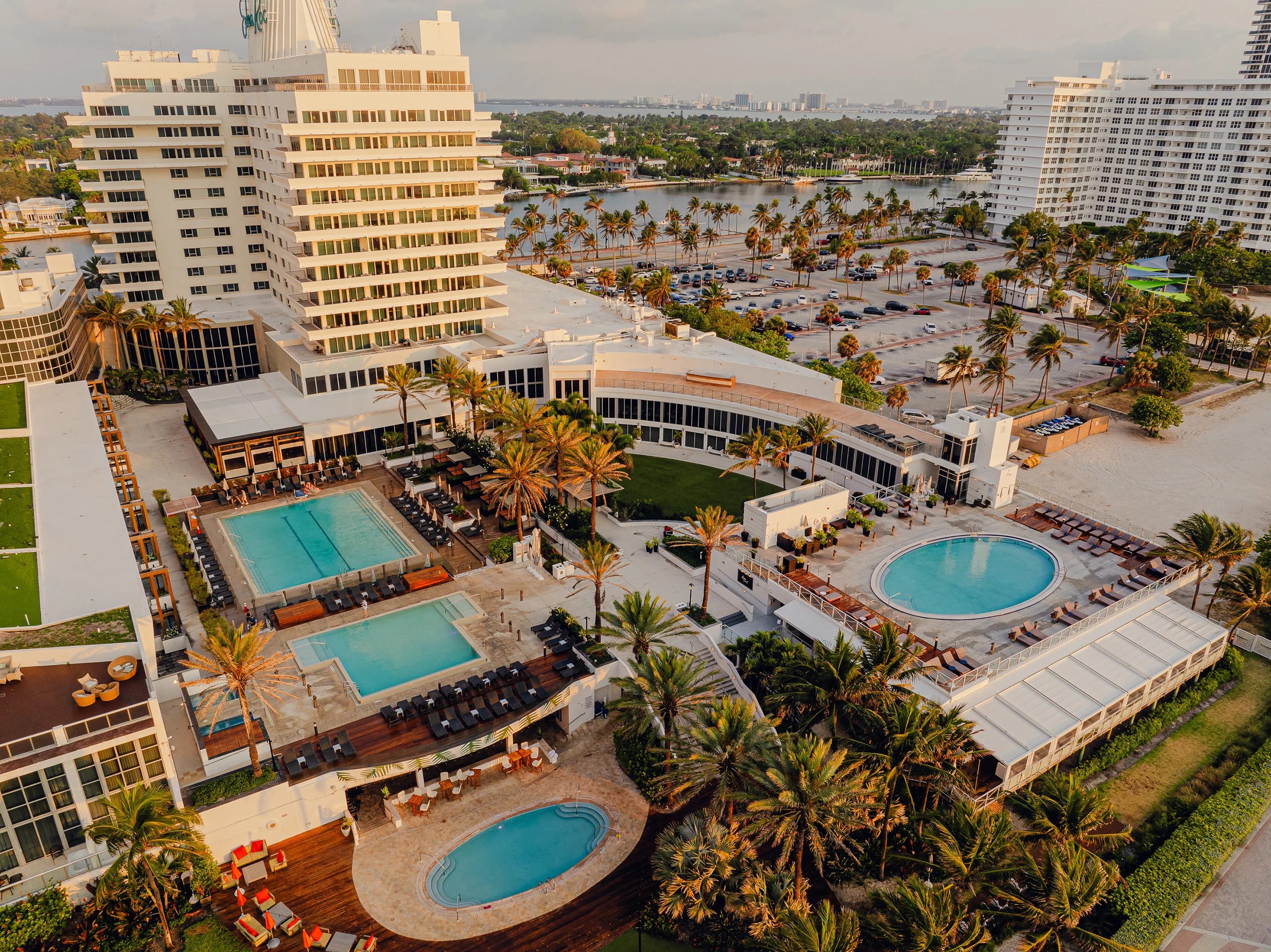
Mid-Beach serves as a vital segment of the primary convention and hospitality cluster that includes Miami Beach, South Beach, and adjacent northern areas such as Surfside and Bal Harbour. The Eden Roc Miami Beach & Nobu Hotel Miami Beach benefits from this placement by offering a resort environment that balances proximity to the Atlantic shoreline with accessibility to the Miami Beach Convention Center and other Collins Avenue properties. This district supports events that require both productive meeting spaces and opportunities for attendee relaxation or networking in a beachfront setting, creating a different operational profile than the urban density of Downtown Miami and Brickell or the logistics-focused airport-west belt.
When mapping event footprints across the market, planners differentiate Mid-Beach for programs that emphasize hospitality and experiential elements. The area connects smoothly with the convention center's extensive infrastructure while providing an alternative to the north coastal extension venues in Sunny Isles Beach and Aventura. This connectivity proves valuable for multi-day conferences where attendees move between general sessions at the main facility and specialized workshops or receptions at area hotels. Neighborhood-specific factors, such as Collins Avenue traffic flow and pedestrian pathways, inform scheduling decisions to maintain efficiency throughout the event timeline.
The broader market signals indicate strong demand for venues that can accommodate both core convention needs and overflow or specialized programming. The Eden Roc contributes to this ecosystem by serving groups that prioritize the architectural character and beach access not as readily available in west-side or downtown locations. Coordination efforts therefore focus on aligning the property's capabilities with overall program objectives, ensuring that district nuances enhance rather than complicate the attendee journey across the connected Miami-Dade and Broward regional market.
Connection between convention center and Collins Corridor hotels
Balance of business sessions with beachfront networking
Differentiation from downtown urban or airport logistics clusters
Support for multi-venue program distribution
Architectural Heritage of Morris Lapidus at Eden Roc Miami Beach
The Morris Lapidus design of the Eden Roc Miami Beach introduces a layer of architectural significance that influences how planners approach event conceptualization and execution. As one of Miami's most recognized mid-century structures, the property provides a backdrop that blends nostalgic glamour with updated resort features. This combination allows coordination teams to develop themes that reference Miami's design history while meeting contemporary expectations for technology integration, seating configurations, and flow patterns appropriate to corporate or association events.
Event design at properties with such distinctive heritage often incorporates the building's original elements into visual storytelling, lighting schemes, and spatial arrangements. The transition from busy city surroundings to the oceanfront oasis at this Mid-Beach location further enhances the experiential dimension. Planners reference these characteristics when preparing proposals that seek to create memorable environments rather than generic function spaces, always ensuring that creative decisions remain aligned with the venue's operational parameters and safety protocols.
The continued relevance of Lapidus-designed spaces in today's meetings market demonstrates the lasting value of architectural distinctiveness. For the Eden Roc Miami Beach & Nobu Hotel Miami Beach, this translates into competitive positioning within the Collins Corridor for events where ambiance contributes directly to program objectives. Coordination resources emphasize early dialogue with venue teams to understand how best to highlight these features without disrupting established service standards or neighboring property considerations along Collins Avenue.
Engaging the Greater Miami Supplier Ecosystem for Event Support
The official Greater Miami Convention and Visitors Bureau supplier directory outlines dedicated categories that enable comprehensive event execution across venue types. These include audio-visual and film services, professional caterers, destination management companies, transportation providers, employment services, and entertainment booking specialists. For programs at the Eden Roc Miami Beach & Nobu Hotel Miami Beach, this network supports the mixed-vendor model common throughout South Florida, where no single entity provides all elements and successful outcomes depend on orchestrated collaboration among approved partners.
This ecosystem approach reflects the market's depth rather than a centralized service model. Suppliers in the region have established track records of working across convention centers, resort hotels, and urban venues to deliver consistent quality. Planners reference the GMCVB resources when identifying partners capable of addressing specific requirements, whether for complex AV presentations that integrate with the property's architecture, specialized menus that complement beachfront receptions, or logistics solutions that account for Collins Avenue access limitations.
Early mapping of supplier needs against the event profile helps streamline procurement and reduce last-minute adjustments. The directory's emphasis on high-quality, collaborative partners aligns with the planning principle that treats each Miami venue as operating under its own platform while drawing from the same regional talent pool. This method has proven effective for both standalone hotel programs and those that extend from the Miami Beach Convention Center's 500,000 square feet of display space into adjacent properties.
Catering and specialized culinary support
Destination management and experiential companies
Transportation and attendee movement solutions
Employment and staffing resources
Entertainment and talent acquisition channels
Venue-Specific Labor Positioning and Service Guidelines
Labor and service arrangements in the Miami market follow venue-driven protocols rather than uniform regional standards. At conference hotels such as the Eden Roc Miami Beach & Nobu Hotel Miami Beach, house services, outside vendor access, and contractor permissions are detailed in property-specific documentation that event organizers and planners must reference. This positioning maintains consistency with official South Florida venue guidance that treats each location according to its individual event platform and exhibitor manual rather than applying blanket market assumptions.
The broader ecosystem includes support from the Greater Miami Convention and Visitors Bureau sales and services team, which assists with contracting, room block management, and general logistics questions. However, final determinations regarding labor categories, setup responsibilities, and operational rules remain with the specific venue and show organizer. This approach allows flexibility while ensuring compliance with all documented requirements, particularly important for properties that combine resort operations with conference functions in the Collins Corridor.
Planners prepare by securing the most current manuals and engaging in structured pre-event meetings to clarify expectations. Such diligence prevents misalignment between anticipated and actual field conditions. The mixed nature of the market, where both venue-managed and approved external resources contribute, rewards those who invest time in understanding each property's distinct framework, including how it interacts with the Miami Beach Convention Center's scale and the surrounding district's operational realities.
Integration with Miami Beach Convention Assets and Regional Capacity
The Miami Beach Convention Center functions as the cornerstone of the regional trade show and meetings economy, providing 1.4 million total square feet that includes nearly 500,000 square feet of versatile display space and 84 meeting rooms. Conference hotels like the Eden Roc Miami Beach & Nobu Hotel Miami Beach extend this capacity by accommodating breakout sessions, sponsor hospitality, product demonstrations, and overnight accommodations that support larger conventions. This complementary relationship enables planners to construct comprehensive programs that distribute activities according to each venue's strengths.
Regional planning also considers the Miami Airport Convention Center's 172,000 square feet of conference and display space as well as the Broward County Convention Center's 350,000 square feet of contiguous display space for true overflow or multi-market campaigns. Treating Miami-Dade and Broward as a single connected region allows for strategic allocation of events across districts. For Mid-Beach programs, this might mean routing certain technical or heavy-freight components through west-side facilities while maintaining the primary experience at the Eden Roc and nearby Collins Corridor properties.
Understanding these interconnections helps coordination teams anticipate logistical requirements and timing considerations. Whether managing a single-property event or a multi-venue activation, the ability to reference accurate market data on space availability and service options supports more precise budgeting and scheduling. The Eden Roc's location in Mid-Beach makes it particularly relevant for groups seeking to combine convention center scale with the differentiated atmosphere of a Lapidus-designed beachfront resort.
1.4 million square feet of total meeting space at the convention center
Nearly 500,000 square feet dedicated to displays
84 breakout rooms supporting concurrent programming
60,000 Square Foot Grand Ballroom for major sessions
Integration across Miami-Dade and Broward county lines
Logistics Coordination and Operational Best Practices
Successful events in the Miami Beach area depend on detailed attention to freight timing, loading dock protocols, and neighborhood routing considerations specific to Collins Avenue and the Mid-Beach district. For the Eden Roc Miami Beach & Nobu Hotel Miami Beach, these elements require advance planning to align delivery windows with venue operations and minimize impact on regular guest activities. Coordination resources stress the importance of early dialogue regarding material handling, storage limitations, and move-in sequencing to establish realistic production schedules.
Exhibitor-appointed contractor coordination represents another key operational focus. The market's vendor-network model functions effectively when all parties operate from the same verified set of venue guidelines and show-specific directives. This includes clear delineation of responsibilities for installation, technical support, and dismantling phases. Planners who document these arrangements thoroughly and maintain open communication channels across the organizer, venue, and contractors typically achieve smoother execution with fewer disruptions.
Best practices also encompass comprehensive timeline development that accounts for the full event lifecycle from initial site inspection through final teardown. In a market characterized by diverse venue types and high seasonal demand, methodical preparation distinguishes well-executed programs. For properties in the Collins Corridor, this often involves additional focus on transportation between locations, supplier synchronization, and contingency planning for weather-related variables inherent to beachfront operations.
Advance freight and delivery scheduling
Clear exhibitor-appointed contractor protocols
Documentation aligned with venue manuals
Multi-phase timeline development
Inter-district transportation considerations
Strategic Market Positioning for Long-Term Event Success
The Miami meetings sector continues to evolve as a sophisticated ecosystem where district-level differentiation drives program design. The Eden Roc Miami Beach & Nobu Hotel Miami Beach exemplifies how individual properties within the Collins Corridor contribute specialized environments that enhance the overall value proposition of the region. By understanding its role alongside the Miami Beach Convention Center and the supplier network, planners can develop strategies that leverage architectural distinctiveness, beachfront access, and operational connectivity for measurable impact.
Effective coordination treats the entire South Florida landscape, spanning Miami-Dade and Broward counties, as an integrated resource rather than isolated venues. This perspective supports creative programming that might begin with registration at a resort property, move to main sessions at the convention center, and conclude with hospitality experiences that utilize the unique character of Mid-Beach. Such approaches require precise planning but deliver differentiated experiences that resonate with sophisticated audiences.
Looking forward, continued emphasis on venue-specific knowledge, supplier collaboration, and logistical precision will define competitive events in this market. The Eden Roc Miami Beach's combination of Morris Lapidus heritage and modern resort capabilities positions it as a valuable component for groups seeking alternatives to more conventional facilities while still benefiting from proximity to the area's primary convention infrastructure and extensive support services.