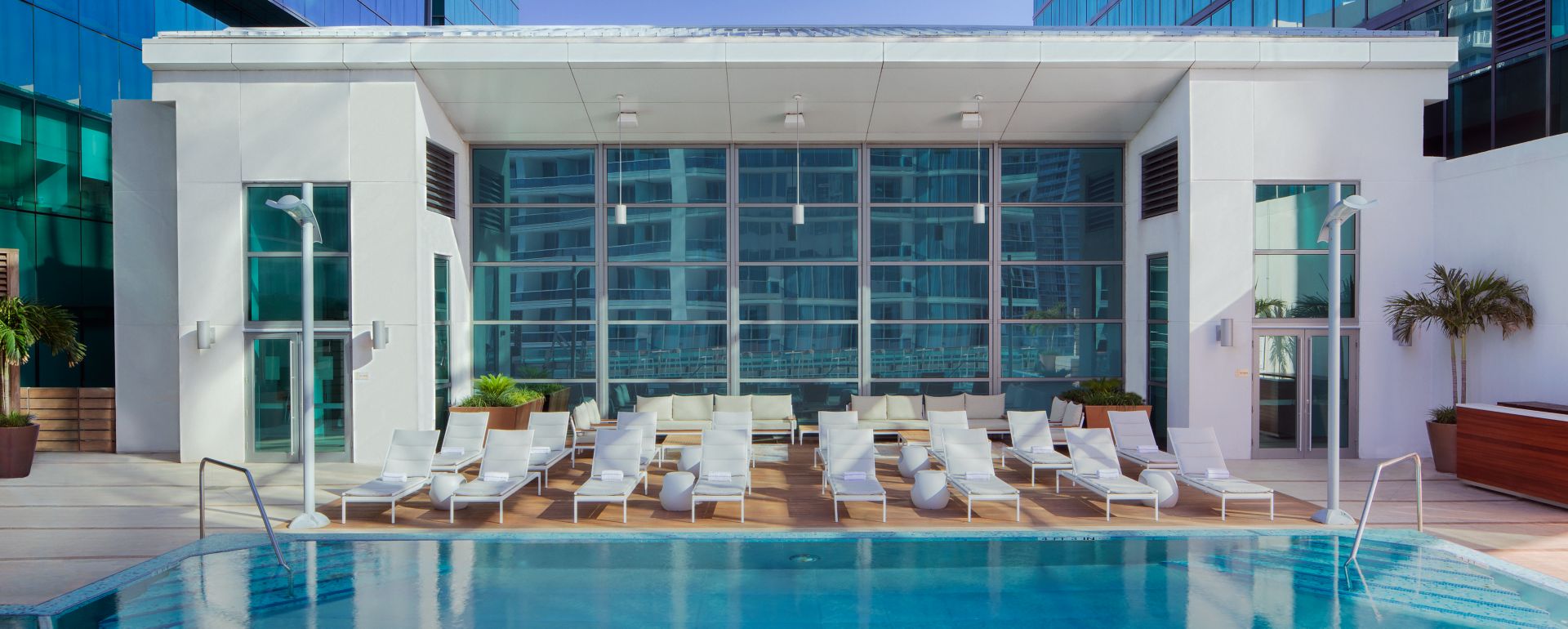
Essential Coordination Factors for the JW Marriott Marquis Miami
Downtown Miami skyline positioning within the Biscayne Bay urban core
Integration with investor events and high-density corporate activations
Venue-specific operational protocols rather than blanket market rules
Access to the documented South Florida supplier categories for AV, catering, and logistics
Clear differentiation from Miami Beach display halls and airport convention facilities
Attention to urban routing, timing, and exhibitor-appointed contractor coordination
Alignment with connected Miami-Dade and Broward County meetings infrastructure
Strategic Placement in the Downtown Miami Conference Cluster
The JW Marriott Marquis Miami operates within the Downtown, Brickell, and Biscayne Bay Core, a distinct cluster that prioritizes conference hotels and urban venues for targeted business functions. This area supports investor presentations, product launches, sponsor hospitality, and corporate meetings that benefit from immediate proximity to financial districts, government centers, and the waterfront. Unlike the primary convention and hospitality concentration led by the Miami Beach Convention Center with its 500,000 square feet of display space and 84 meeting rooms, Downtown properties emphasize intimate scale and smooth integration with the surrounding city fabric.
Planning for this district requires understanding neighborhood-specific routing and the realities of operating in a dense urban environment. Freight movements, material deliveries, and exhibitor load-in processes follow patterns that differ from beach corridor or airport-adjacent properties. The cluster connects naturally with nearby assets including the Miami Convention Center and James L. Knight Center, allowing organizers to build multi-venue programs that distribute activities across complementary downtown locations while maintaining focus on Biscayne Bay views and metropolitan accessibility.
Market data consistently positions this core as essential for high-value, lower-density activations where technology, design, and service quality take precedence over raw square footage. Coordination resources therefore stress precise scheduling that accounts for city traffic patterns, building access restrictions, and the need for smooth transitions between guest rooms, meeting spaces, and adjacent public areas. This district-level nuance helps exhibitors avoid the congestion sometimes associated with larger beachfront convention activity while still participating in the overall South Florida meetings economy.
Supports corporate programs tied to financial and urban business networks
Complements rather than competes with the 1.4 million square feet at the Miami Beach Convention Center
Facilitates sponsor activations that leverage Biscayne Bay as a scenic backdrop
Requires detailed attention to downtown-specific timing and access protocols
Enables hybrid programs that link with Brickell and Edgewater venues
Property Characteristics and Guest Experience Planning
Official listings describe the JW Marriott Marquis Miami as a premier destination for luxury, business, and culture, marking it as the First to Market JW Marriott property in the area. The 313 guest rooms, which include 56 suites, incorporate State of the Art technology and sophisticated design elements that support both overnight accommodations for conference attendees and potential use in experiential brand environments. These features allow planners to create continuity between daytime sessions and evening networking or hospitality functions without leaving the property.
When structuring programs, attention turns to how guest facilities interact with meeting areas to maximize flow and minimize operational friction. The property's placement in the Metropolitan Miami development offers direct connections to surrounding urban amenities, restaurants, and transportation options that enhance the overall attendee journey. Planning documents for similar downtown conference hotels stress the value of mapping these connections in advance to ensure smooth movement of people, materials, and equipment throughout the event timeline.
Technology integration across rooms and suites becomes a central consideration for exhibitors introducing new products or conducting hands-on demonstrations. The sophisticated design serves as a neutral yet elevated backdrop that accommodates custom branding while maintaining the property's luxury positioning. Coordination at this level involves early dialogue with venue management to confirm technical capabilities and any property-specific guidelines that govern installation and operation of temporary displays or interactive displays.
Utilizing the South Florida Supplier Ecosystem
The Greater Miami Convention and Visitors Bureau maintains a supplier directory that separates categories for audio-visual and film services, caterers, destination management companies, transportation, employment services, and entertainment booking. This structure reflects a market that relies on specialized outside vendors rather than single-source solutions. For events at the JW Marriott Marquis Miami, this ecosystem supplies the technical, logistical, and support services necessary to execute programs that meet the expectations of corporate and association audiences.
Effective planning involves matching specific supplier competencies to the unique demands of downtown hotel environments. Transportation partners familiar with Biscayne Boulevard routing can optimize arrival and departure logistics, while AV providers experienced in urban hotel ballrooms ensure smooth presentation quality. The directory's breadth allows organizers to build teams that align with both the property's luxury standards and the broader requirements of South Florida events that may span multiple days or incorporate elements from neighboring counties.
Documentation from official sources highlights how these suppliers collaborate to create cohesive experiences. Rather than assuming universal access or standardized procedures, successful coordination treats each category as an independent resource that must be vetted against the current event manual and property policies. This method maintains compliance while drawing on the depth of talent available across the Miami-Dade and Broward regional market.
The ecosystem approach also supports scalability. Programs that begin at the JW Marriott Marquis Miami can extend into overflow activities at nearby venues or shift to the airport-west belt for larger display components if needed, with suppliers who understand the distinct operational signatures of each cluster.
Dedicated categories for AV, catering, DMC, transportation, and staffing services
Supports venue-specific rather than market-wide labor assumptions
Enables customized solutions for technology-forward guest room activations
Facilitates coordination across connected Miami-Dade and Broward venues
Operational Considerations and Venue-Specific Protocols
Each South Florida property maintains its own event platform and service guidelines, making venue-specific research a foundational planning step. For the JW Marriott Marquis Miami, this translates to close review of current documentation regarding load-in procedures, material handling, and permitted contractor roles. The mixed nature of the regional labor environment means final conditions depend on the individual show organizer, the property's house rules, and any applicable exhibitor manuals rather than generalized assumptions about union status or outside access.
Urban core logistics introduce additional variables, including delivery windows that coordinate with city traffic management and building security protocols. Planning resources therefore recommend building buffer time into schedules and confirming exact access points well in advance. This level of detail helps prevent disruptions that could affect the sophisticated attendee experience the property is known for. Coordination extends to post-event dismantling and outbound freight, where downtown routing constraints require careful sequencing to avoid peak-hour conflicts.
Exhibitor-appointed contractors play a defined role in this environment, requiring clear communication chains that respect both the venue's expectations and the organizer's directives. The planning process benefits from early mapping of these relationships to ensure all parties operate from the same set of approved guidelines. Official market materials consistently frame these elements as property-led, reinforcing the need for tailored preparation rather than standardized frameworks.
Review current property event manual for each program
Account for downtown delivery timing and security protocols
Establish clear communication with exhibitor-appointed contractors
Sequence inbound and outbound logistics to respect urban constraints
District Differentiation Across Miami Venue Clusters
Miami's meetings market divides into four primary clusters, each with distinct operational signatures. The Miami Beach Convention and Collins Corridor centers on the 1.4 million square foot Miami Beach Convention Center and its associated beachfront hotels, prioritizing large-scale displays and walkable South Beach hospitality. In contrast, the Downtown, Brickell, and Biscayne Bay Core, where the JW Marriott Marquis Miami is located, focuses on corporate depth, investor functions, and urban sophistication that leverage the financial district and waterfront views.
The airport, Doral, and west access belt provides 172,000 square feet of conference space including 100,000 square feet of display area and serves exhibitors who require easier trucking routes and fabrication access. Further north, the coastal extension encompassing Sunny Isles, Aventura, and spillover into Broward County supports luxury resort meetings and incentive programs. Understanding these differences allows planners to select the JW Marriott Marquis Miami for initiatives where intimacy, technology, and downtown proximity deliver strategic advantage over the scale offered by the Miami Beach Convention Center or the freight efficiencies of the airport district.
Broward County adds further depth with its own convention assets and future expansion plans, creating a unified South Florida region for major shows and overflow activity. Programs at the JW Marriott Marquis Miami can therefore function as standalone corporate events or as components of larger regional campaigns that distribute activity across clusters based on content type, audience profile, and logistical requirements. This connected perspective helps maximize the strengths of each district while mitigating individual limitations.
Venue strategy in this market treats the entire ecosystem as interdependent. The JW Marriott Marquis Miami's role emerges most clearly when planners map its capabilities against the documented capacities of neighboring properties and adjust accordingly for each specific program.
Best Practices for Program Development and Execution
Successful initiatives at the JW Marriott Marquis Miami begin with early alignment between event objectives and the property's luxury business positioning. This includes mapping desired outcomes against available guest room technology, suite configurations, and public spaces to create environments that reinforce brand messages without compromising the venue's established aesthetic. Detailed timelines that incorporate supplier confirmation points and venue approval gates reduce last-minute adjustments and support the smooth experience attendees expect.
Documentation and communication form the backbone of effective coordination. Maintaining a single source of truth for technical specifications, delivery schedules, and responsibility matrices helps all participants navigate the mixed-supplier environment. Regular check-ins with both the property and key vendors ensure that urban-specific variables such as Biscayne Boulevard access or Metropolitan Miami security protocols remain visible throughout the planning cycle.
Post-event review processes capture lessons about downtown routing efficiency, technology performance in the suites, and overall flow between sessions and hospitality elements. These insights inform future programs not only at this property but across the connected downtown cluster. The regional nature of South Florida meetings means knowledge gained at the JW Marriott Marquis Miami often transfers to complementary venues in Brickell, Edgewater, or even north-coastal locations when similar corporate audiences are involved.
Align brand objectives with the property's luxury and technology infrastructure
Maintain centralized documentation for all vendor and venue touchpoints
Incorporate urban logistics buffers into master timelines
Capture district-specific insights during post-event analysis
Design modular elements that can scale across multiple Miami clusters if needed
Preparing for Connected Regional Meetings Activity
The Miami meetings economy treats Miami-Dade and Broward counties as a single operational region for major conventions, overflow programs, incentive travel, and specialized activations. The JW Marriott Marquis Miami participates in this ecosystem by offering a refined downtown counterpoint to both the massive scale of the Miami Beach Convention Center and the logistics-focused airport properties. Planners therefore evaluate this venue not in isolation but as part of potential multi-property campaigns that distribute content according to audience segments and functional requirements.
Supplier relationships developed for one cluster often extend across boundaries, allowing continuity in AV quality, transportation standards, or catering excellence whether the program remains in Downtown Miami or shifts to Broward facilities. This flexibility supports contingency planning and enables organizers to respond to registration trends or unexpected demand spikes by activating additional inventory in adjacent markets. The official supplier directory and convention bureau resources facilitate these connections by providing categorized, vetted partners familiar with regional variations.
Long-term preparation involves monitoring how infrastructure developments and property enhancements across the region may influence future programming at the JW Marriott Marquis Miami. As the market continues to position itself as a comprehensive destination spanning beach, urban, airport, and resort environments, the ability to coordinate fluidly between clusters becomes a competitive advantage for exhibitors and meeting professionals alike.